


Something big has arrived at Adhesa Plate—and we’re excited about what it can help you create. Our new Canon Arizona 1360 GTF flatbed printer, part of the Arizona family known for its Océ heritage, adds another way to turn your artwork into compelling product graphics.
For our customers, the exciting part is what comes next: more options when a project calls for colorful graphics, a sample you can put in front of your team, or a design that needs to work on a particular surface. We’re adding this capability to the printing, cutting, and materials knowledge you already count on from Adhesa Plate.
Think about a new equipment panel taking shape, a product graphic moving through design review, or a short run with several artwork versions. Digital flatbed printing gives us another route to explore those jobs without creating a separate printing screen for every color. That can make artwork changes and small batches more practical, depending on the material and finishing requirements.
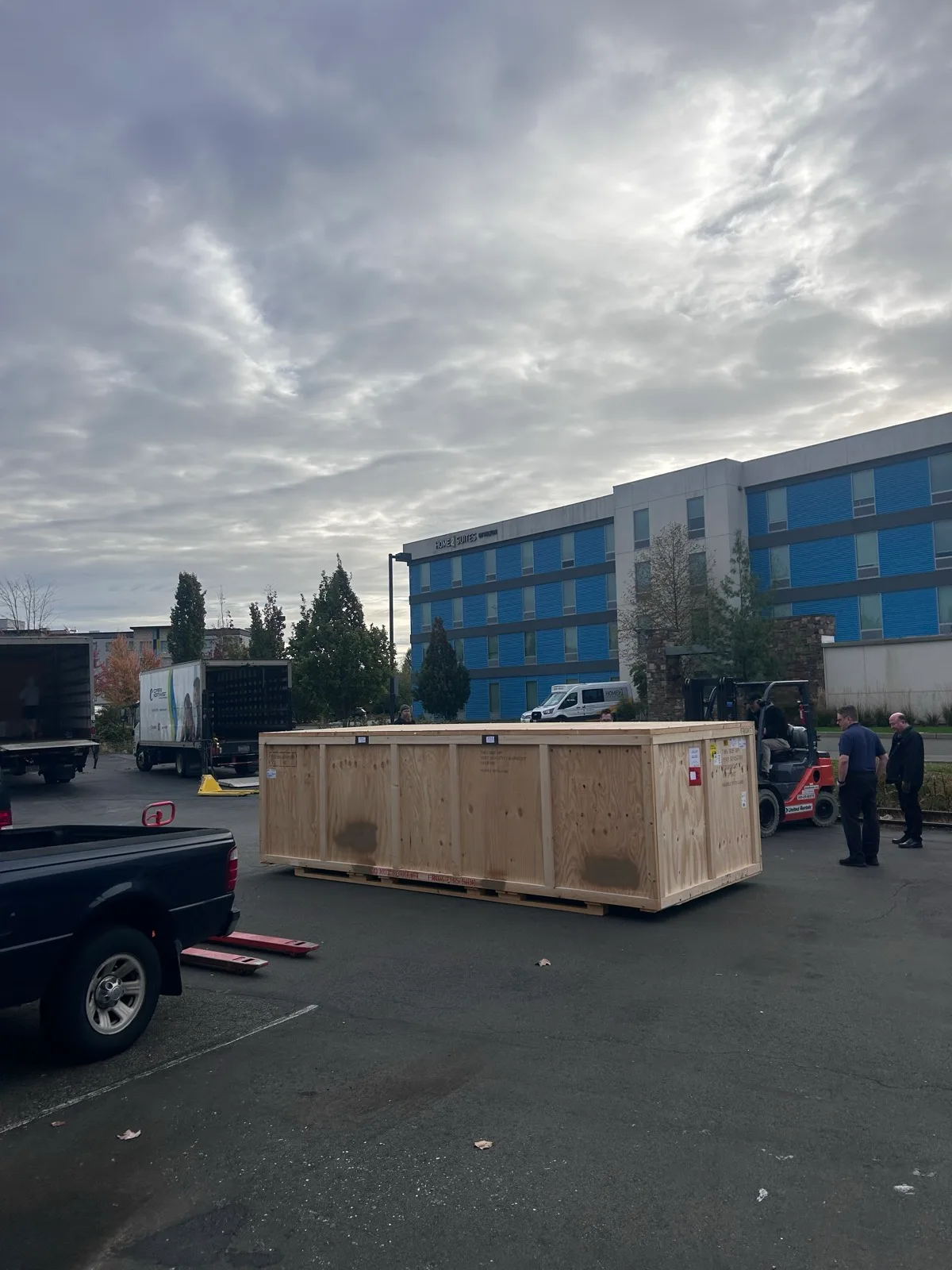
The delivery photos capture the beginning of that story. A new machine is an investment in the work we can do together—and in helping your next idea move from a file on a screen to something you can see and evaluate.
More room to explore your next project
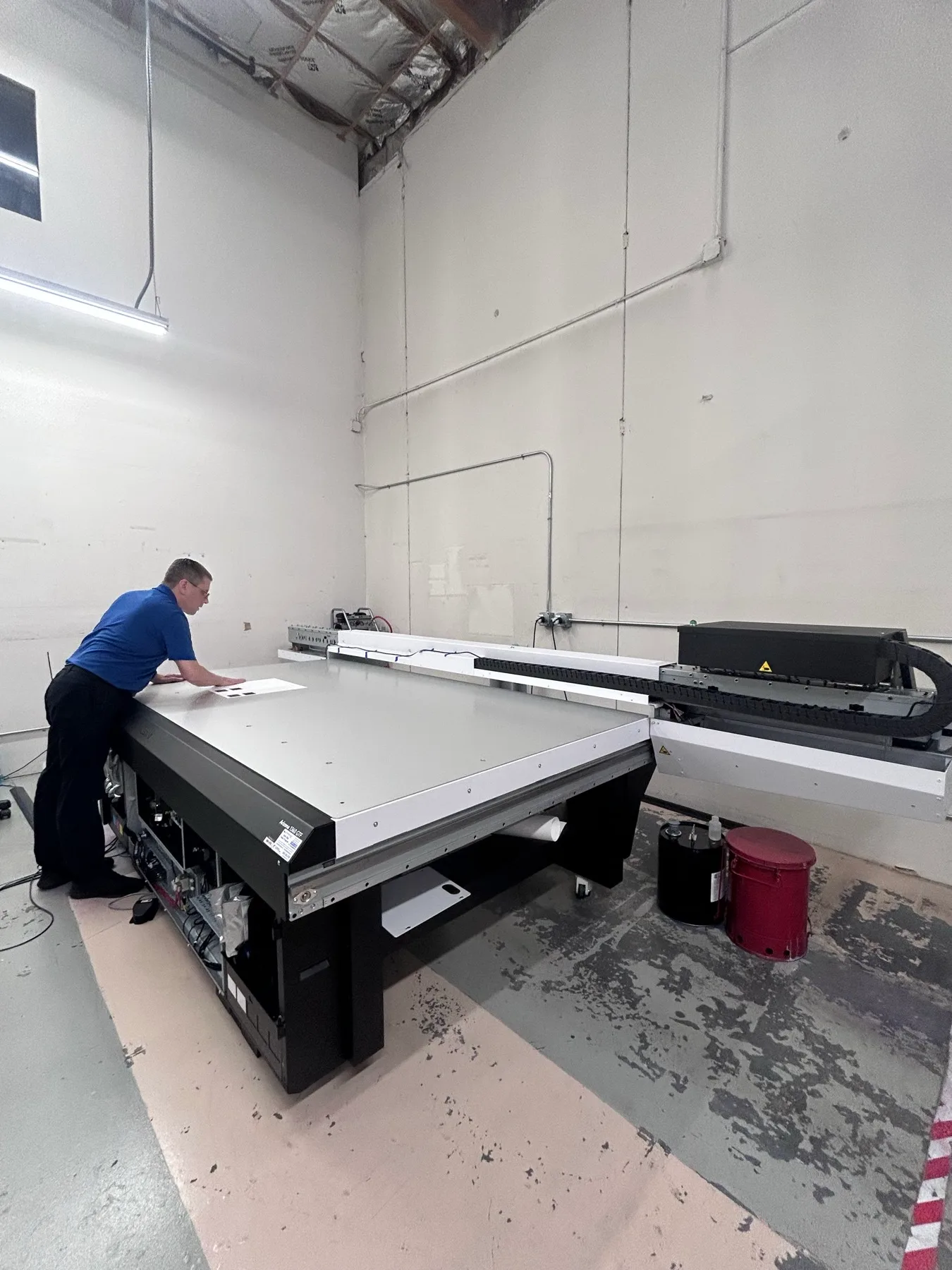
Make design decisions with a physical sample. Color, fine detail, and the character of a surface are easier to discuss when everyone can look at the same printed piece. A sample can help your engineering, purchasing, and marketing teams agree on the direction before committing to a larger run.
Keep artwork revisions manageable. Digital printing starts with a file, so a revised logo, a different graphic, or an updated instruction can be prepared without making new color screens. There is still careful file preparation and setup, but the process gives us flexibility when the design is evolving.
Consider direct printing where it makes sense. For suitable flat materials, printing directly to the surface can remove a separate graphic-mounting step. Whether that is the right route depends on your part, its finish, the intended use, and how the finished piece will be handled.
Our role is to help you choose the construction that fits. Bring us the artwork, material, dimensions, quantity, and service conditions, and we can discuss a sample and a production approach. The Arizona expands that conversation; it works alongside our other processes so the job can guide the choice of equipment.
Under the hood: why a true flatbed matters
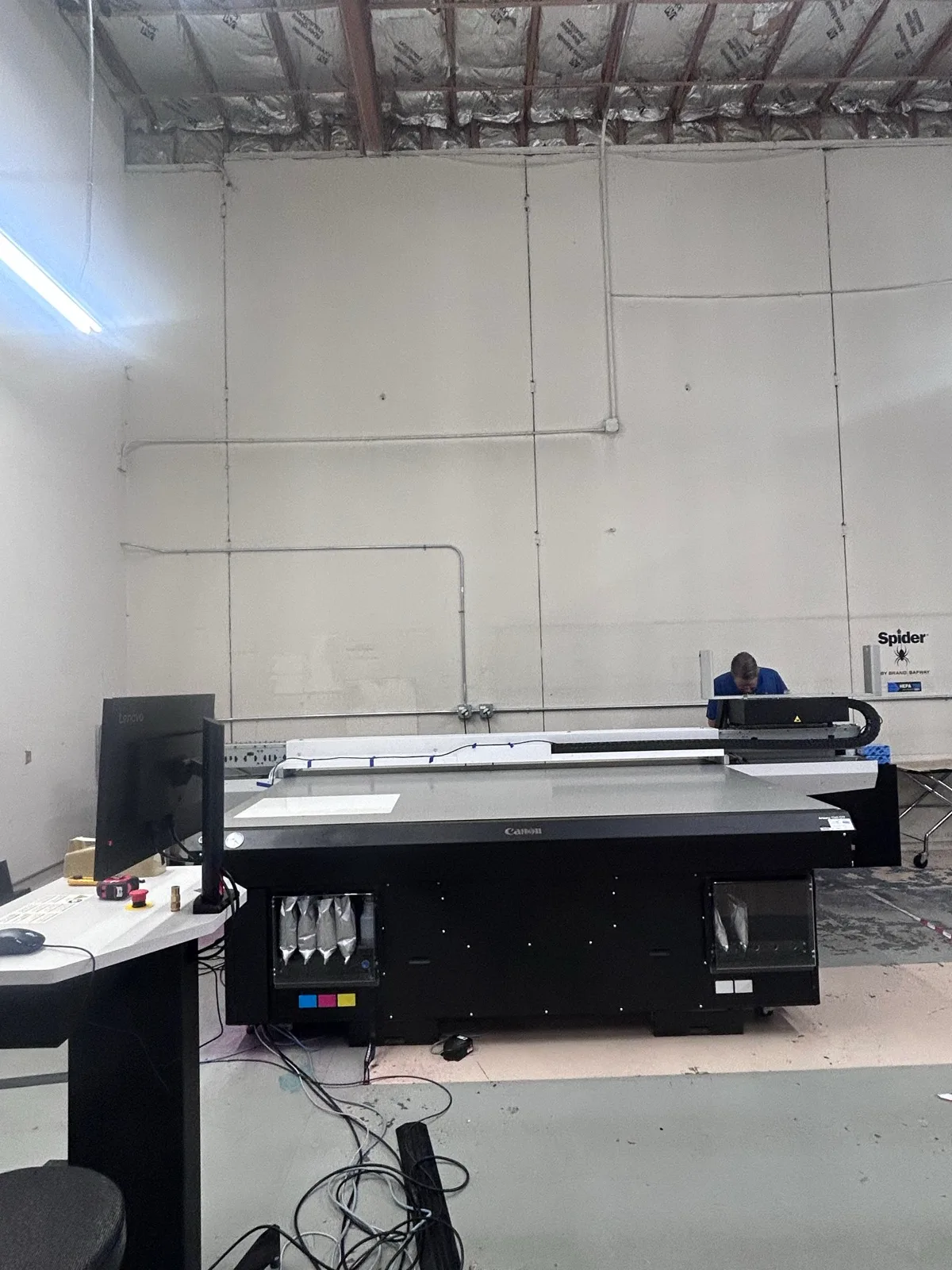
The Arizona uses a stationary flatbed and a moving print gantry. The material stays on the table while the printing assembly moves across it. Vacuum hold-down helps keep the media in position, supporting consistent alignment as the image is built. That matters when a graphic contains fine lines, small type, or elements that need to stay aligned through successive printing passes.
For a customer, the benefit is a controlled way to place artwork on compatible flat media. It also changes how we can approach samples and sheet layouts: the printing process is built around holding the work in place rather than feeding every piece through a conventional paper path.
Canon’s Arizona 1300 family combines this flatbed approach with UV printing. The practical value comes from matching that technology to the job: a stable surface, an appropriate print mode, prepared artwork, and a material that responds well to the ink system.
UV curing, color, and the finished construction
UV-curable ink is set by ultraviolet light during printing. The Arizona 1300 series uses LED UV curing, helping the printed ink become ready for subsequent handling without a conventional evaporative drying stage. That can support a more direct progression toward inspection and finishing, while the requirements of the particular material still determine the complete workflow.
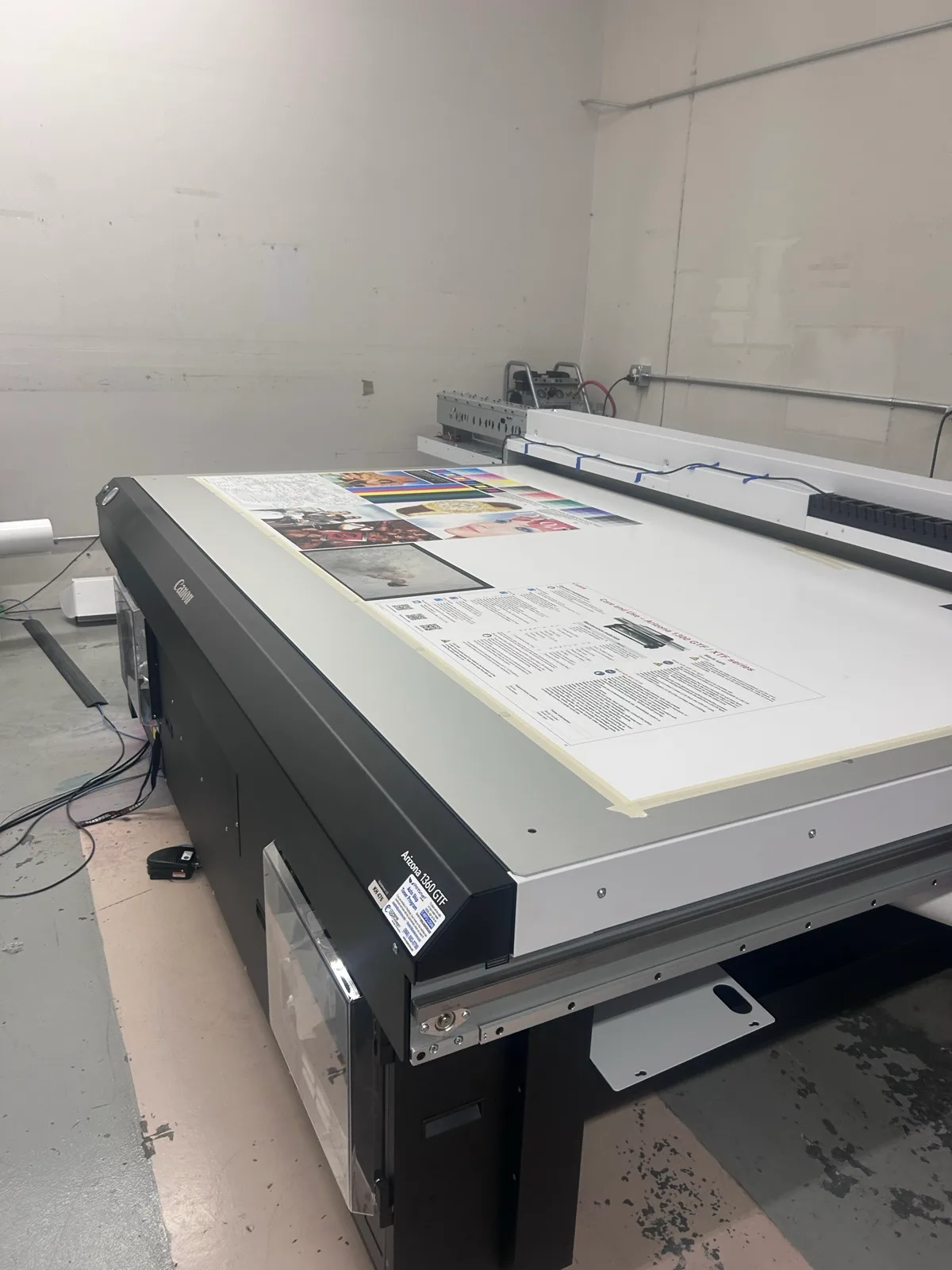
Color is a process, not just a printer setting. Artwork preparation, media profiles, print mode, and the surface itself all affect the result. The sample sheet in our photos includes photographs, color transitions, and fine text—useful material for looking at image reproduction before applying those lessons to a customer’s artwork.
The whole construction still matters. Ink adhesion, abrasion, cleaning chemicals, sunlight, and any bending or forming must be considered for the intended application. A good-looking print is the starting point; the substrate, ink, protective layers, and finishing steps need to work together. We’ll discuss those conditions with you and identify appropriate sample testing rather than assume one print process suits every environment.
We’re excited to put this new tool to work on your ideas. If you have a product graphic, panel, or custom printing project in mind, talk with our team about the material and the result you need.
Technical background: Canon’s Arizona 1300 series overview. Available features vary by model and configuration.
Watch a sample demonstration
Take a closer look at a sample sheet on our new Arizona in the short video below. The clip shows photographs, color bars, and detailed graphics together on the flatbed—a quick glimpse of the sample work behind this new capability. Have an application in mind? Let’s discuss what a demonstration using your artwork and material could look like.